A FISHERMEN’S VILLAGE… AND MUCH MORE

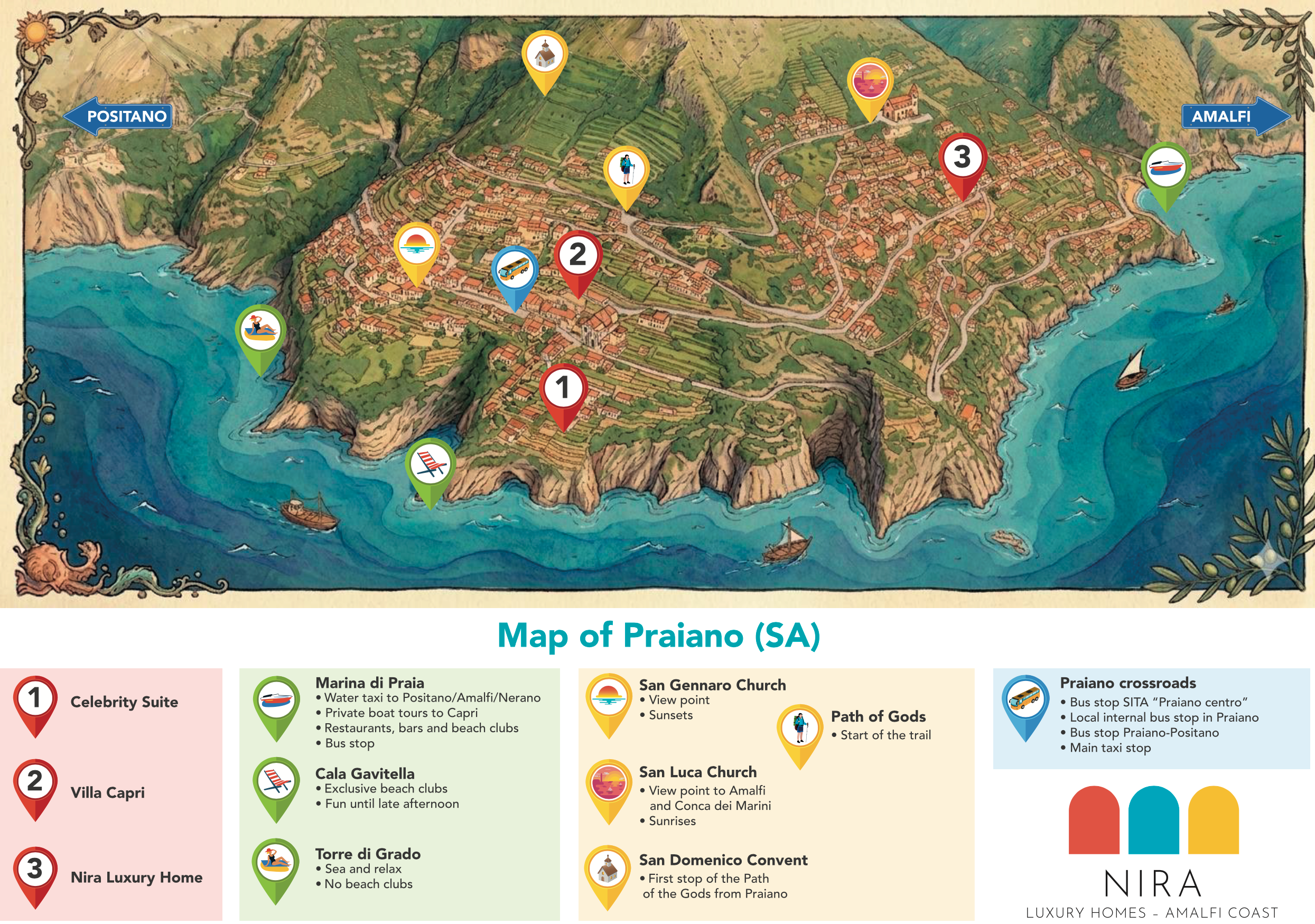
PRAIANO

Between Positano and Amalfi, suspended between sky and sea, Praiano is a place that does more than simply exist — it breathes light. Its houses face east and every morning they glow with the first rays of the sun, while at night the moon quietly rests on the rooftops.

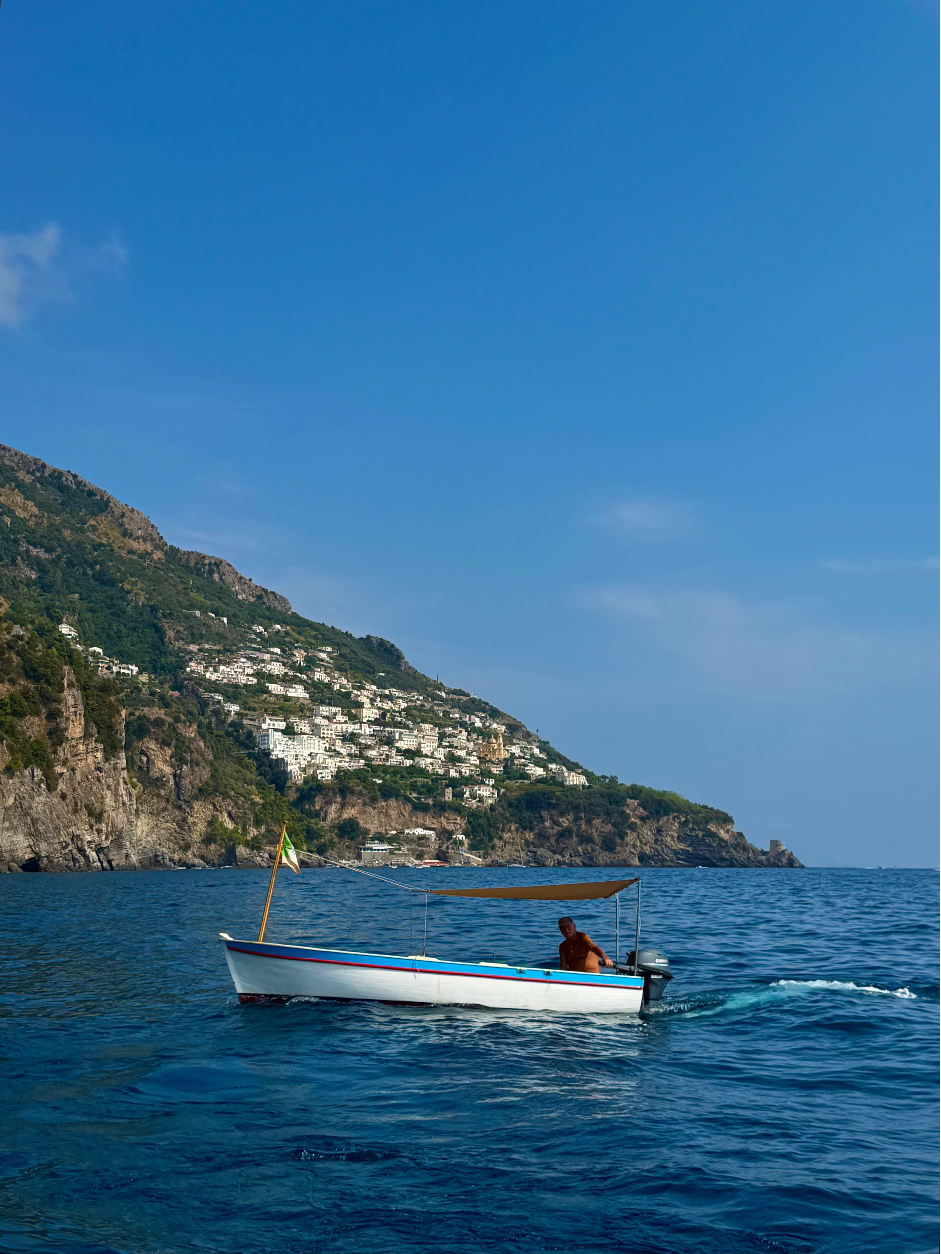
Praiano has long been known as the fishermen’s village. For centuries the sea was not only a breathtaking view but also the main source of livelihood for local families. In ancient times, the village stood closer to the shoreline, but events such as tidal waves, plagues, and Saracen raids forced residents to move higher up the hillside in search of safer ground. The coastline was later protected by watchtowers during the Angevin period and by defensive structures built during the Spanish viceroyal era.
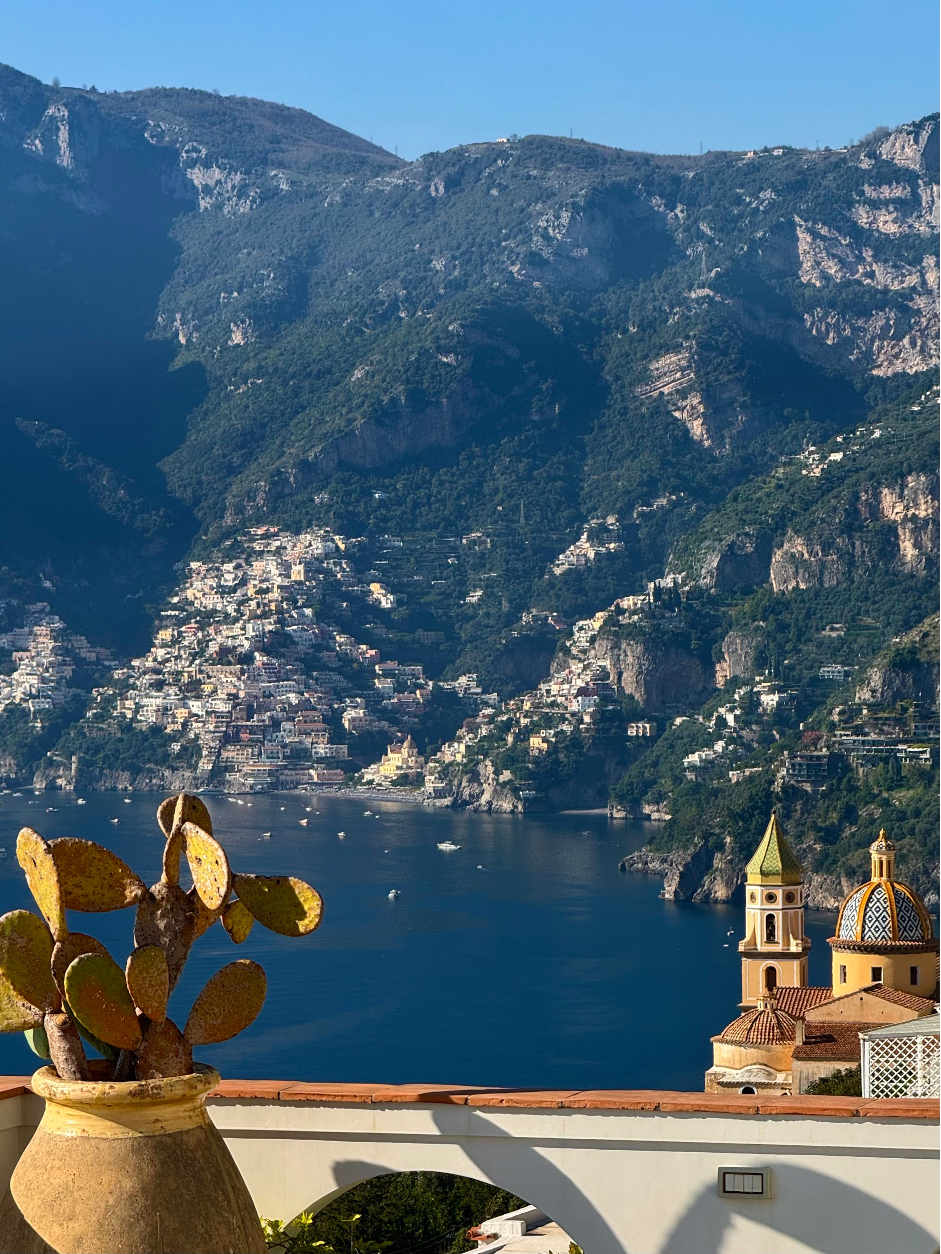
Inside the traditional houses, with their ribbed barrel vaults, nothing is left to chance: every stone has been carefully chosen, and every dry-stone wall skillfully built to drain water and support the terraces. On these terraced slopes grew citrus groves, vineyards, and fields of wheat and barley. It is no coincidence that the town’s coat of arms features three oranges, a symbol of fertility, hard work, and local identity.

During the Angevin period, Praiano was granted the title of “Universitas”, a recognition given to towns with a certain degree of autonomy and administrative importance, while still remaining connected to Amalfi until the 17th century.

Alongside fishing and agriculture, other activities gradually developed over time: silk production and twisted yarn processing, spinning and bleaching of linen, the making of fishing nets, and even the trade of human hair. The men of Praiano were known not only as fishermen and farmers, but also as skilled coral fishermen.

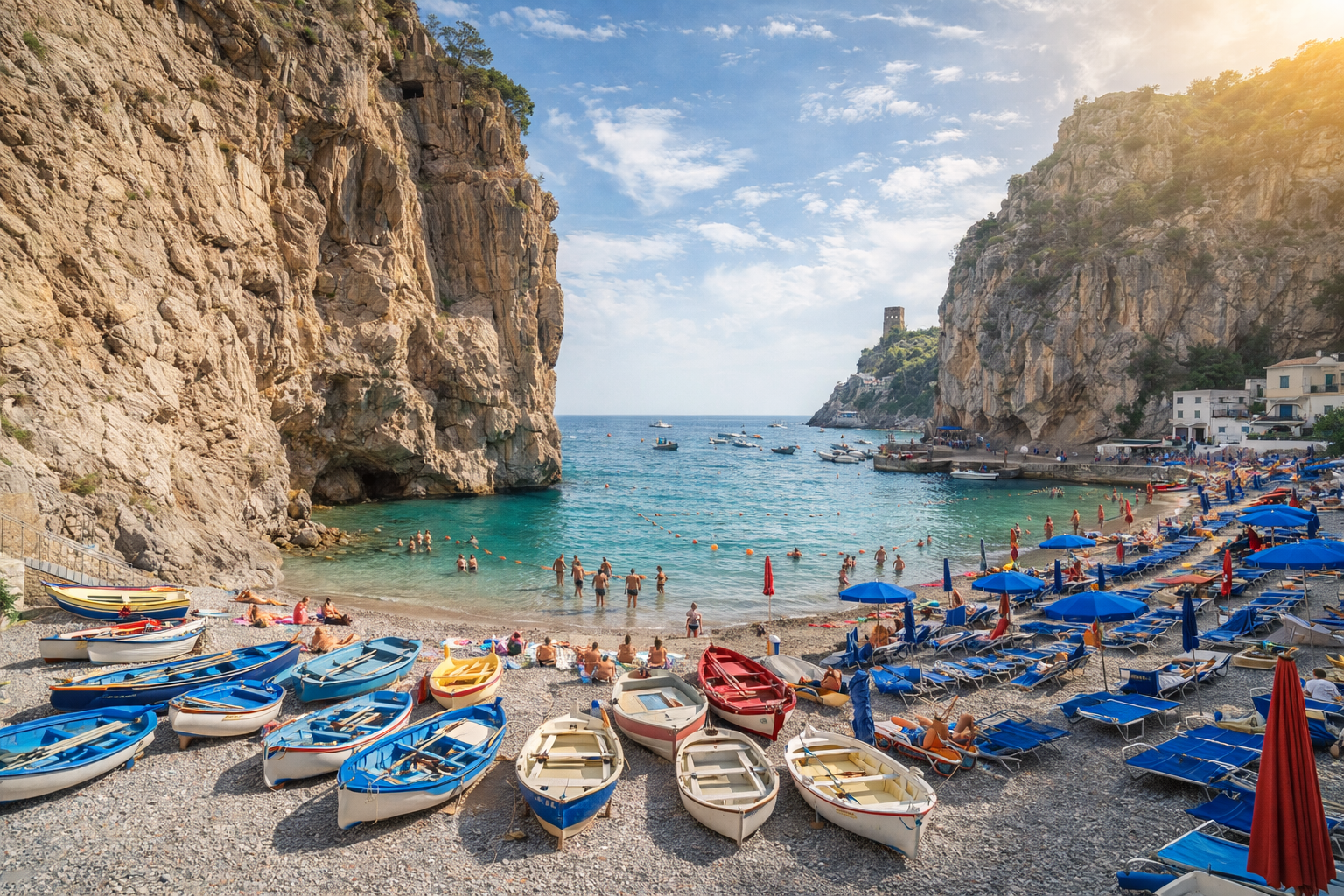
The beating heart of the local economy was Marina di Praia: a small yet vibrant harbor where boats were built, fishing nets were woven, anchovy and sardine brine was prepared, and ropes were crafted using the “libano”, a plant commonly found along the coast. Timber transported from Agerola via cable systems also arrived here, later loaded onto ships bound for the coasts of Africa.

Another distinctive feature of Praiano is the remarkable presence of churches: around fifteen in total, along with numerous private chapels once attached to noble residences.

Today Praiano is light, memory, and resilience. It tells the story of a community that learned to live with the power of the sea and the ruggedness of the cliffs, transforming both into beauty.

LINKS AND INSIGHTS

“The Tourism Oscar – The Amalfi Coast, Italy’s Queen”. In Praiano the return of the award to the territory and the first edition of the “Destination Amalfi Coast Award”.


Tourism: according to Airbnb, Praiano is the most welcoming tourist destination in Italy (2023)

BOOK YOUR STAY NOW